
Instructions
- 01
Fire Up the Smoker
Preheat your pellet grill or smoker to 250°F. Give the pit time to settle into a clean, steady burn before the pork goes on.
- 02
Season the Pork
Trim any loose edges or excessive hard fat if needed, then season both pork shoulder sections generously on every side. If they have a fat cap, leave a thin layer and cook them fat-side up.
- 03
Build the Bark
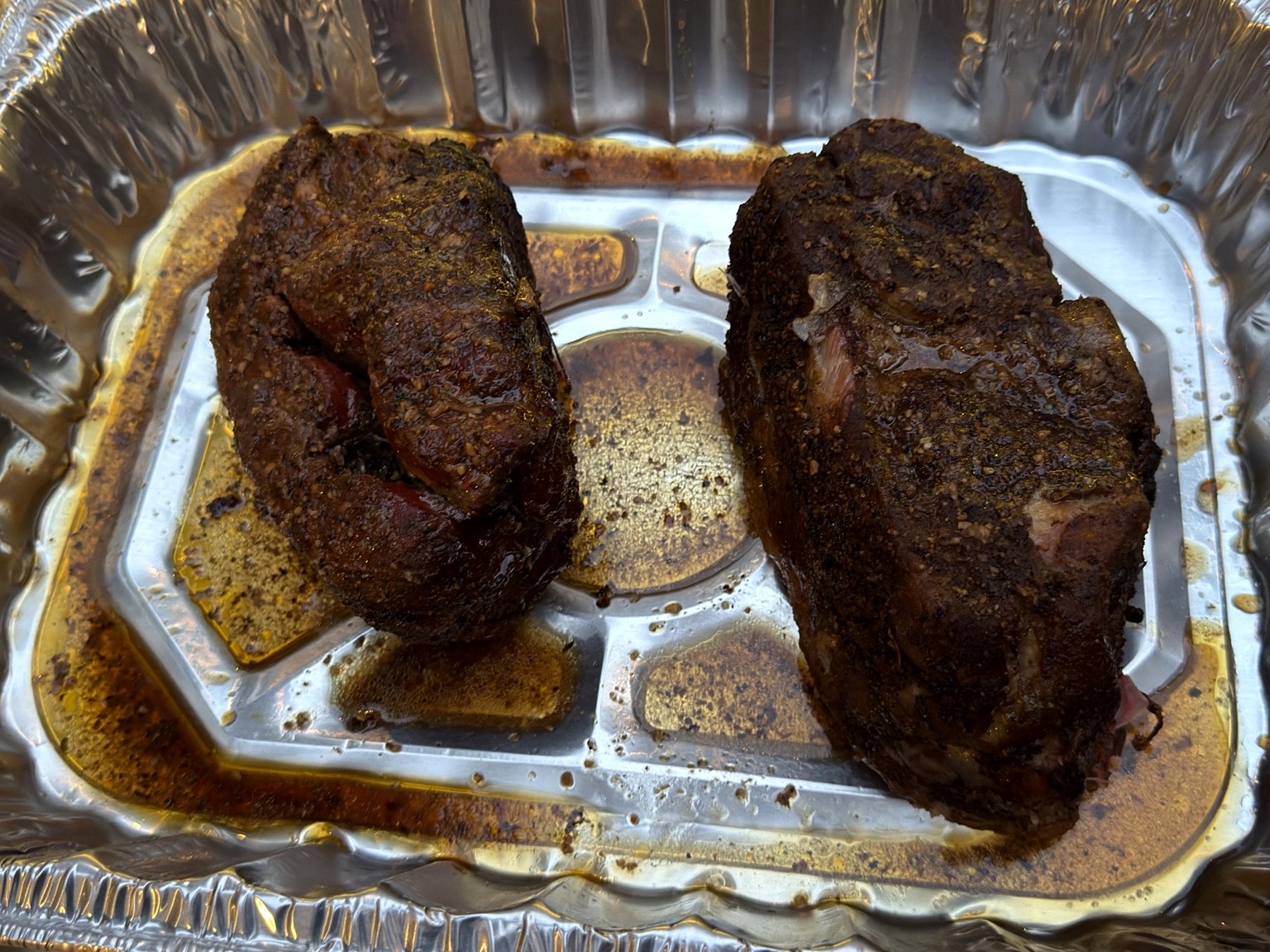
Put both pork shoulder sections on the smoker at 250°F and leave them alone long enough for the smoke and rub to build a dark, firm bark. Start thinking about the wrap when the internal temperature is around 165°F, but let the bark make the final call.
- 04
Add the Tallow & Wrap
Wrap each shoulder section separately in heavy-duty foil or butcher paper, adding Wagyu beef tallow before sealing each one tightly. The tallow adds richness and gives the pork a little extra insurance through the wrapped portion of the cook.
- 05
Finish the Cook
Return both wrapped sections to the smoker. You can stay at 250°F or bump the pit up modestly after wrapping if dinner is getting closer. Start checking each section for tenderness around 200°F.
- 06
Follow the Probe
The finish temperature is a guide, not a finish line. My shoulders usually land somewhere around 200–205°F. Probe several areas. When the probe slides in and pulls out with almost no resistance, you're there. Around here, we call that "like a greased pig."
- 07
Give It a Long Rest
Remove the wrapped pork and shut the smoker down. With a well-insulated ceramic cooker, open the lid for about 30 minutes to bleed off excess heat, then put the wrapped pork back in and close the lid. Rest for 2–3 hours if your schedule allows. If you're using the cooker as a hot-holding chamber, keep the pork at or above 140°F.
- 08
Pull, Pour & Serve
Open the wrap carefully and save the juices. Pull the pork, remove any pieces of fat that did not fully render, and fold the reserved juices back through the meat. Add a little love, pour the cook an optional bourbon, and get it to the table.